
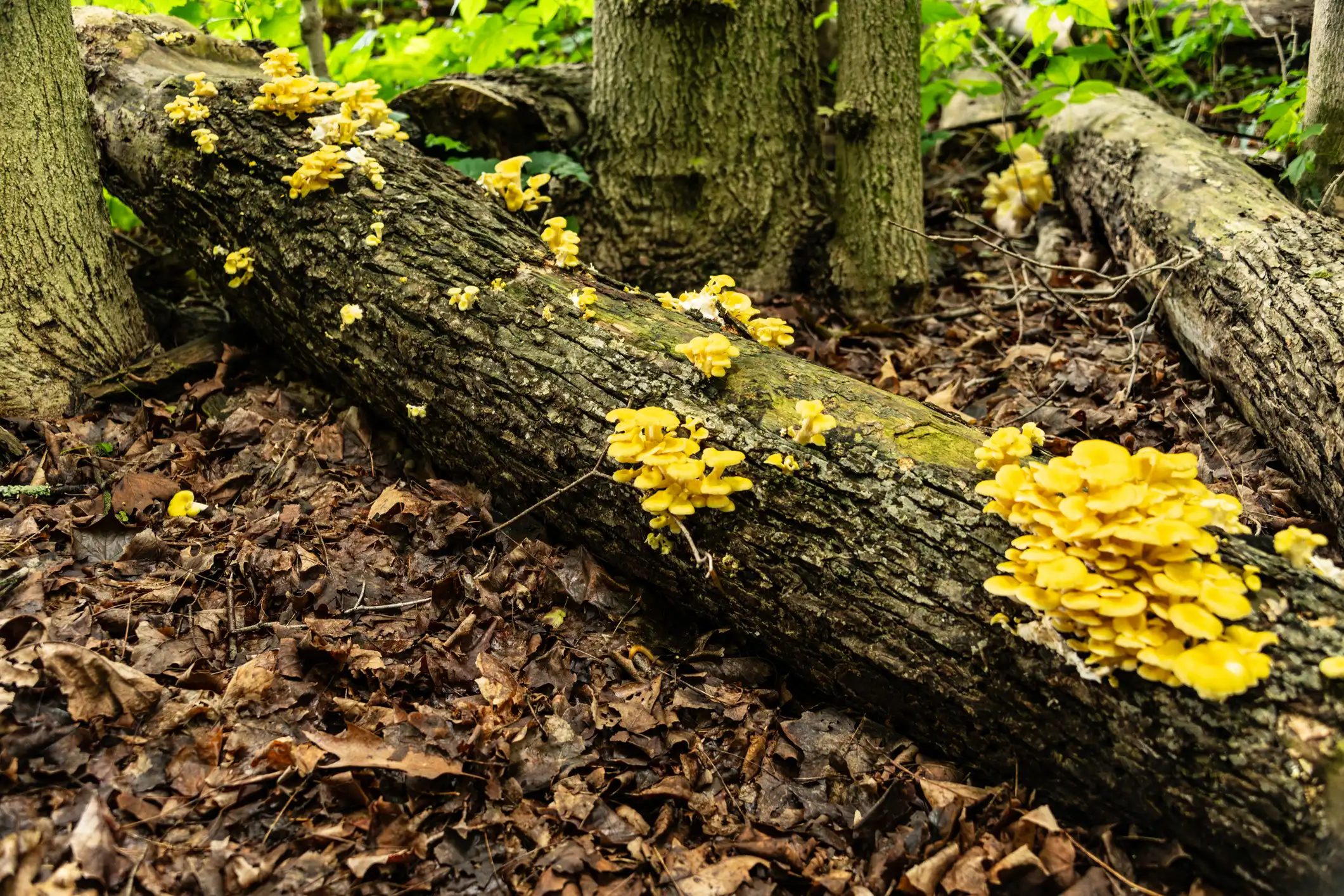
A new gold rush is hitting North America: the kind where the treasure is also the trouble.
The afternoon heat hangs heavy over the Michigan frontier as a mushroom farmer loads boxes of fresh gourmet mushrooms into a sprinter van. The delivery of fresh mushrooms, including shiitake, maitake, and Golden Oyster, is bound for a local farm to table restaurant. He drives a scenic, forested route to Kalamazoo, Michigan, rolling his windows down along the way to enjoy the breeze.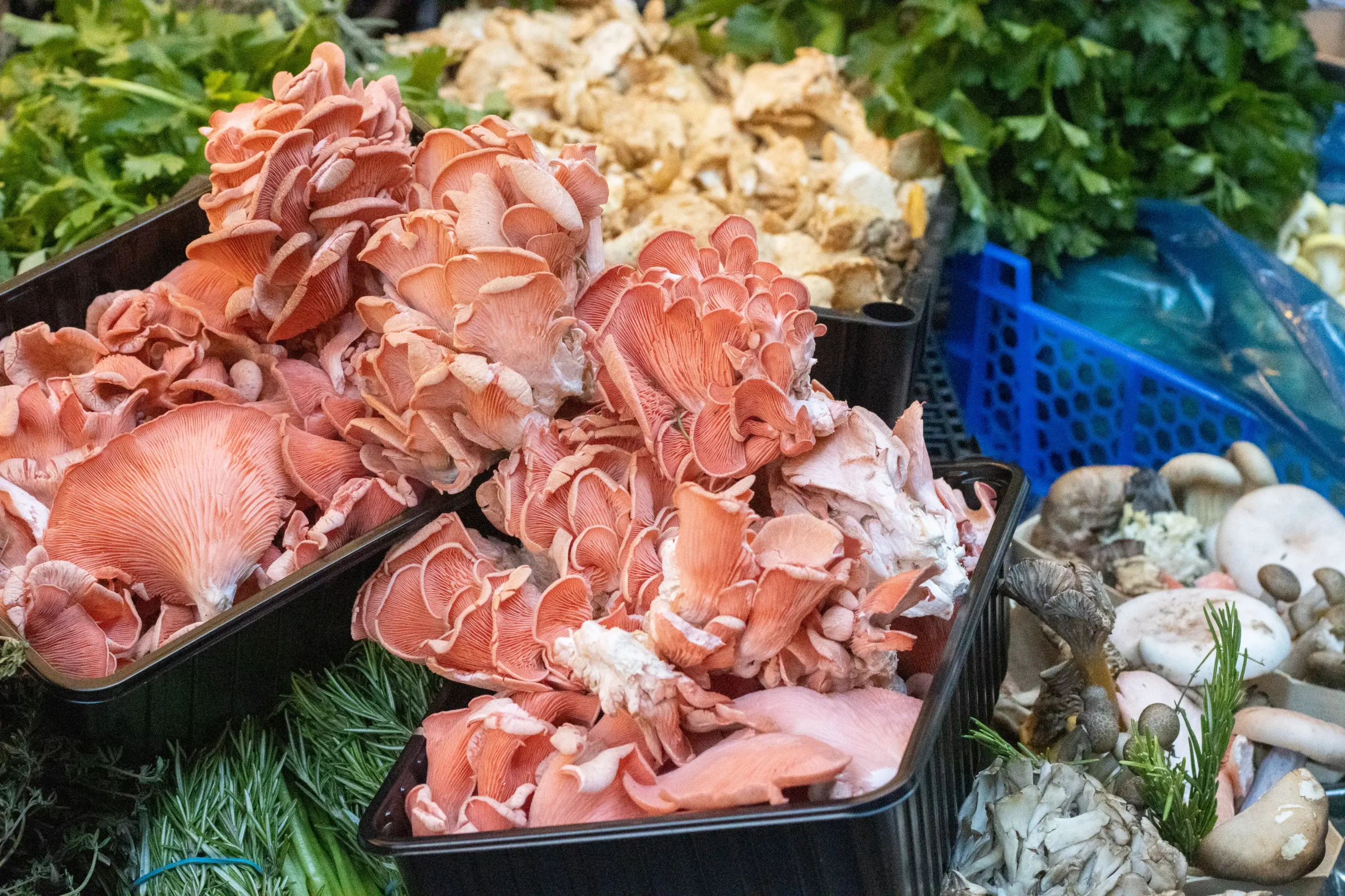
In Virginia, on the outskirts of the George Washington National Forest, the setting sun paints the hills in copper and gold as a curious home cultivator wraps up her own project–one of many in her ambitious home garden. She heard in her mushroom club that Oysters were some of the easiest mushrooms to grow, so she too decided to try her hand at the Golden Oyster variety. When the vibrant yellow fruits start blooming from their grain bag, the gardener sets the project outside, and harvests the mushrooms as they reach their full size. After harvesting all the flushes she can, she discards the remaining bag into her home compost bin.
Professional mushroom farmers and home cultivators alike are unknowingly contributing to a growing environmental problem, the root cause of which you would never expect. The pernicious golden Oyster mushroom is spreading, and the problem is getting serious. The fungus has now spread across over 25 US states and is considered an invasive species.
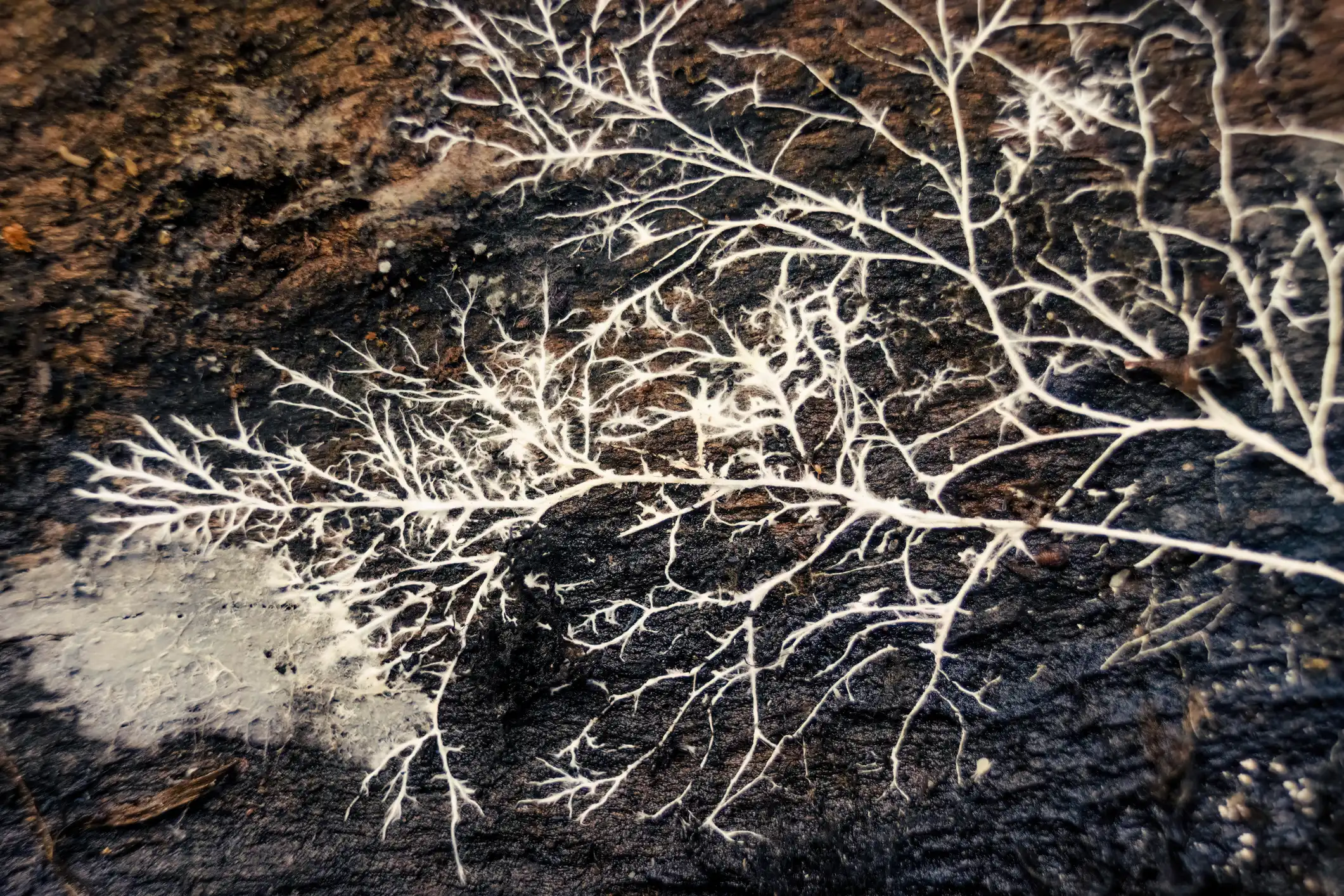
Its heavy spore deposits will be carried by the wind, through open windows, and travel on clothes, cars, and anything else it can latch onto. Its robust mycelium can even spread through a compost bin or garden bed, taking root in vulnerable habitats and forming an underground network. So how did we get here, and what can we do about it?
The Resilient Oyster
The Pleurotus genus is a resilient one. If a person wants to grow prodigious amounts of edible mushrooms with as little money, time, and effort as possible, an oyster species is the obvious choice. All fungi are decomposers, but oysters readily break down and colonize almost any substance as their food source. They’ve been found all over the world, from tropical to temperate climates. The invasive Golden Oyster is going West. It’s native in Europe and Asia, but easily adapts to environments all over the world.
It’s obvious why the gold rush has taken hold. Golden Oysters, like all Oysters, are highly nutritious, and easy to grow. Growers typically start them from mushroom spores or a live culture, and the barrier to entry is low. Unfortunately the trend of growing and eating Golden oysters has also led to their uncontrolled spread.
This town ain’t big enough for the two of us: Golden Oysters as an invasive species
Most scholars agree that the issue emerged when commercial cultivators started selectively breeding oyster mushrooms for farmers and home growers. Genomic sequencing indicates that the invasive oysters found in the wild originated from commercial strains. Breeders look for traits that make mushrooms easier to grow; from robust, aggressive mycelium, to environmental flexibility like heat and cold tolerance. Though the exact “mechanism of escape” is unknown, we know that oysters are robust and produce lots of spores that easily carry in the wind, so there are many avenues for it to spread.
Why are invasive species dangerous to the environment? Once introduced to new ecosystems, these oysters, selectively bred for their ability to thrive, have an unfair advantage when competing with native fungi for territory.
Golden Oyster spreads quickly, especially in forests, because its preferred food source is dead trees– particularly elm, oak, and beech. When the oyster ‘escapes’ its cultivation environment, it quickly becomes invasive, outcompeting the wild mushrooms in areas it colonizes. Ecologists estimate that trees without golden oyster mycelium typically host around forty different species of fungi, but those colonized by Golden Oyster present with around twenty. This one single species is so aggressive that it slices fungal diversity in half. 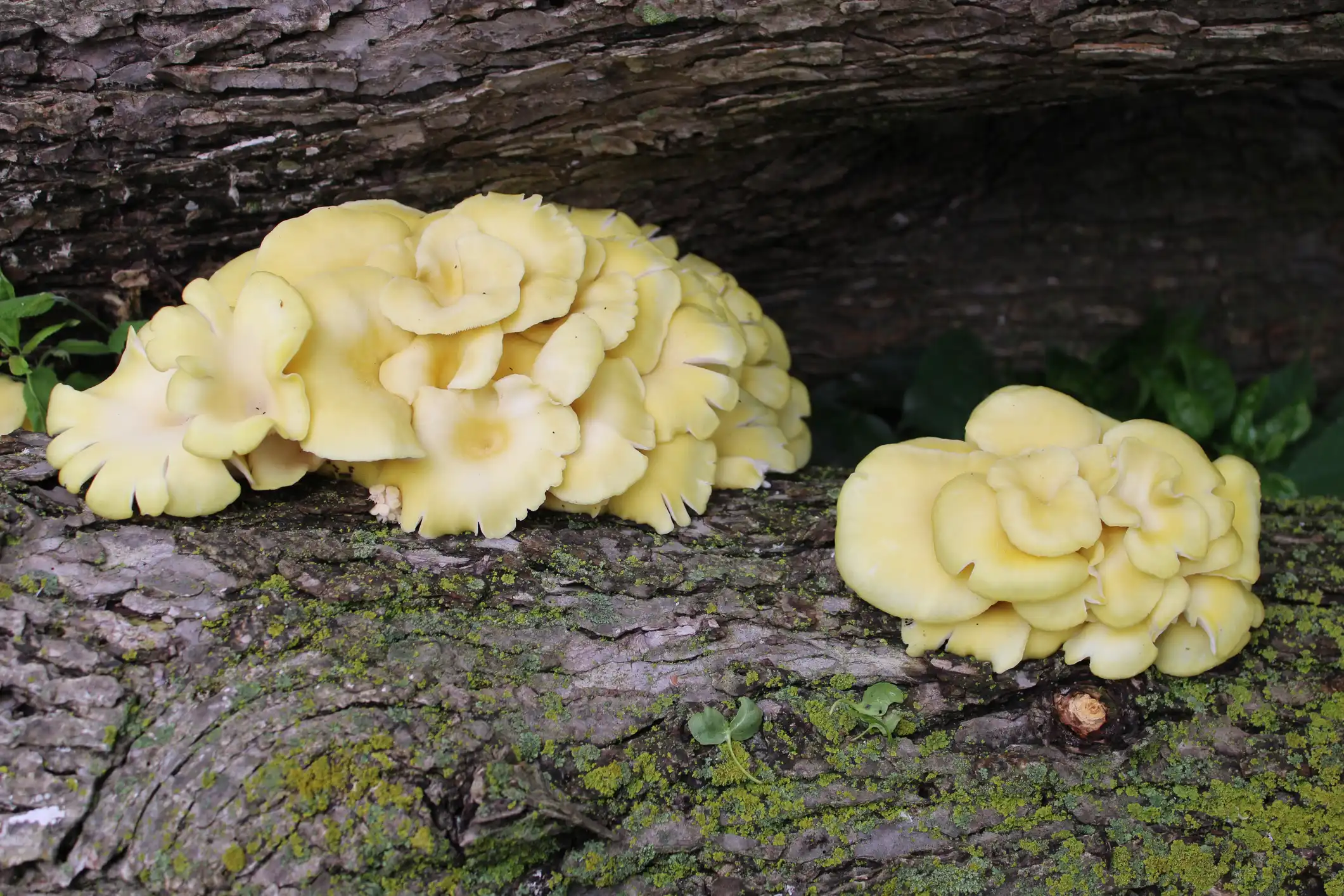
Although native fungal diversity isn’t highly visible to the passive observer in a forest environment, it’s literally the ground we walk on. There are countless species which are basically invisible actors, and we can’t predict the downstream loss if these species cease to exist in the environment. Animals that eat certain fungi would have to find another food source. Species of plant matter that decompose through certain fungi can no longer decompose, so chains of soil breakdown would be disrupted.
The North American Oyster problem
Golden oyster was first identified as an invasive species in North American forests in 2018. Right now, the midwest and mid-atlantic regions of the United States are the most under threat. Unfortunately as the problem rages on uncontained, the issue is creeping West, slowly overtaking any state with hospitable conditions, which turns out to be most of them for the resilient oyster.
The spread of the invasive Golden oyster is not only a concern in its own right but also a reminder of the broader threat posed by invasive species. Because we don’t fully understand the long-term consequences of its presence or the downstream effect on native ecosystems, states and forests affected by the Golden oyster should remain alert to wider ecological risks.
Mitigating the invasive golden oyster
Once its mycelium spreads through the ground, like a forest floor, it can’t be removed. Still, not all hope is lost for areas where Golden Oyster spreads. It just means that mitigation efforts don’t take place at the level of stopping Golden Oyster mycelium, but instead, by preventing the spores from spreading further.
Chiefly, this means cultivating different gourmet species, whether it’s different oyster species, or wild mushrooms native to your area. Though Golden Oyster is the primary threat, some ecologists warn against cultivating any Oyster species because they are so hardy and resilient. If you grow oysters, make sure to keep the project indoors, especially throughout the fruiting process. Any chance for the fruited mushrooms to spread spores outdoors can be damaging, because the spores can carry for miles in the wind. Working from a contained spore syringe indoors gives you more control over where spores end up. When you’re done with your grow, make sure everything is disposed of in the trash rather than the compost, so the mycelium doesn’t have the chance to spread further.
Harvesting oysters in the wild won’t stop them from spreading completely, but when done properly, it can still be a worthwhile way to help. When you see invasive golden oyster growing in the wild, it might be a chance to harvest the mushrooms before they send huge spore deposits flying for miles in the wind. Picking the mushrooms and carrying them out of the forest in an airtight container or bag can stop the spores from spreading in its tracks. The airtight bag will prevent you from inadvertently spreading the spores on your way out. Once harvested, Golden oysters are the perfect versatile culinary mushroom for grilling and sauteeing. Their mild, earthy flavor pairs well with just about anything.
The gold rush is on. Strike it rich with wild golden oysters. Hit the trail and round up the gold before it spreads.